
Key Takeaways
| What you will learn | How it helps your Basil Plant |
| When to Start | Snip when your basil hits 6 inches tall, but there’s one subtle sign most growers miss. |
| Where to Cut | Discover the precise $1/4$-inch rule that keeps stems from rotting & dying back. |
| The Bushy Trick | Learn how a simple trim tricks the plant into doubling its main branches overnight. |
| Pinch the Blooms | Find out why cutting top-down preserves vital solar energy for rapid growth. |
| Harvest Routine | Understand the golden $33\%$ harvesting rule to prevent sudden root shock. |
| Post-Prune Care | Uncover essential post-trimming light & water steps to accelerate full recovery. |
This comprehensive guide covers everything you need to know on how to prune basil step-by-step to achieve healthy & abundant harvests.
How to Prune Basil for Bushy Growth: Complete Organic Guide
Basil (Ocimum basilicum) is one of the most beloved & versatile culinary herbs in home gardens worldwide.
When learning how to prune basil, always locate the central leaf node before making your first cut.
Whether you are cultivating sweet Genovese basil for homemade pesto, Thai basil for authentic curries & purple opal basil for garden color, mastering proper pruning techniques is essential.
By simply picking off individual leaves for kitchen recipes, learning how to prune basil is an ongoing practice of plant-first stewardship.
Pruning does not harm or shock your plant.
Instead, it serves as a life-giving act of care that encourages vigorous side-branching, delays premature seed production & keeps your herbs lush & productive throughout entire growing season.
1. Understanding Apical Dominance in Basil Growth
To understand how to prune basil effectively, it helps to explore natural biological processes occurring within your plant’s vascular system.
Basil naturally exhibits a growth habit known as apical dominance.
The main central stem- or growing tip produces a growth-regulating hormone called auxin.
This hormone travels downward through the stem tissue & actively suppresses the growth of dormant side shoots located in lower leaf.
When you perform a clean & intentional cut to remove the primary growing tip—following precision node techniques– you can stop the flow of auxin.
Dormant buds stuck into the leaf nodes wake up & transform into two brand-new side branches.
By continuing this rhythmic trimming process every few weeks, you systematically double your plant’s structural branches & convert a single thin stem into a full spherical bush packed with fragrant foliage.
2. How Trimming Triggers Double Branching
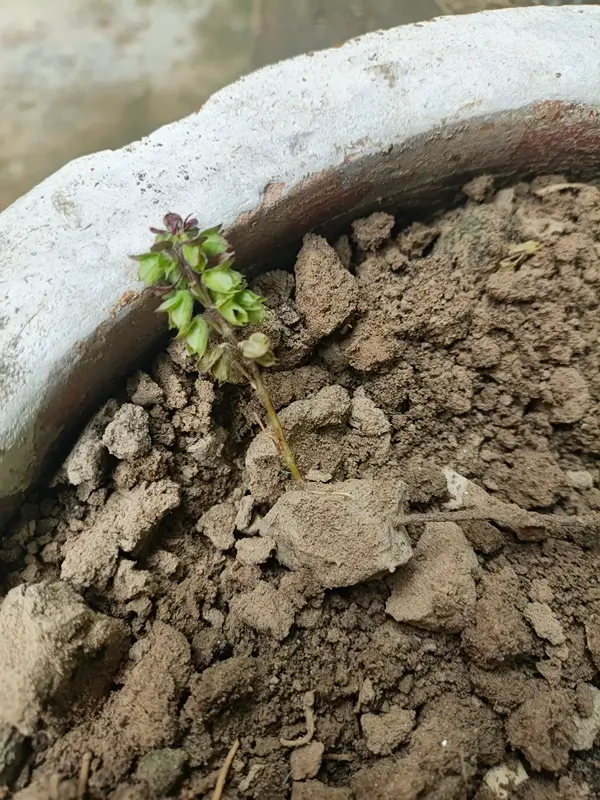
Managing flower spikes is a crucial part of learning how to prune basil plants to prevent bitter foliage.
Another critical biological reason to prune your basil is managing its natural reproductive cycle.
As an annual herb, basil’s ultimate biological goal is to flower & complete its life cycle before winter.
When a basil plant enters its flowering phase:
-
Nutrient Diversification: Plant channels vital energy, moisture & ground nutrients away from leaf production toward generating floral spikes & seed pods.
-
Flavor Alteration: Essential aromatic oils like eugenol shift chemically & leaves quickly lose their sweet flavor & take on a bitter taste.
-
Stem Hardening: Soft & green stems become tough, woody & fibrous – making them unpalatable for culinary use.
By routinely inspecting stem tips &removing emerging flower buds early you keep your basil in its vegetative state & extend its natural lifespan & maintain tender & sweet-tasting foliage for continuous harvesting.
Pruning is one of those gardening tasks it’s essential for plants’ health & productivity.
Regular pruning stimulates bushier growth – instead of growing tall with few leaves & pruned basil produces multiple branches laden with abundant foliage — this is portion we use in our dishes or for medicinal purposes.
Interestingly – renowned botanist Francis Halle stated that “In nature everything evolves by contradiction,” speculating that stress from pruning endows plants with vitality.
When a gardener prunes their basil plants strategically & gently imposes ‘stress’, their beloved botanical companions counteract this adversity by proliferating vital greenery.
Exact Cut Locations & 4-Step Pruning Techniques
Mastering cut location is the single most vital biological step when learning how to prune basil for maximum leaf yield & bushy growth.
Placing your cuts in wrong position—either trimming too close to the leaf node or leaving leafless stem stubs—can lead to severe stem rot & fungal infections.
By taking a gentle & humanitarian plant-first approach to herb stewardship – every cut is made with botanical precision to minimize tissue trauma & encourage fresh side branches.
Step 1: Locate the Ideal Leaf Node
- Scan central main stem from the soil surface upward.
- Locate a healthy leaf node at exact point along stem where two mature leaves grow directly opposite each other.
- Look closely at the small joint where leaf stalk connects to main stem.
- You will see two tiny & bright-green baby leaves starting to sprout. This junction is your primary cut location.
Step 2: Position Cuts 1/4 Inch Above the Node
Once you pinpoint cut location – place your micro-tip snips or clean fingernails approximately 1/4 inch (6 mm) directly above the leaf node.
-
Why 1/4 inch matters: Cutting too close node nicks & kills tiny emerging side shoots.
-
Avoiding stem stubs: Leaving more than half an inch of bare stem above the node leaves dead plant tissue that turns brown, rots & invites garden pests.
Step 3: Make a Clean Horizontal Cut
Make a straight – horizontal cut across stem.
Never twist or pull the stem as tearing outer bark strips away protective plant cell walls.
Smooth cuts allow stem vascular tissue to seal naturally within hours & redirect plant sap straight to new side branches.
Step 4: Harvest Top-Down to Protect Plant Energy
Always prune starting from top of the plant working downward.
Keep lower leaves intact so they can capture sunlight & as detailed in the organic care guides at Plants Nexus, for recovery after every cutting session.
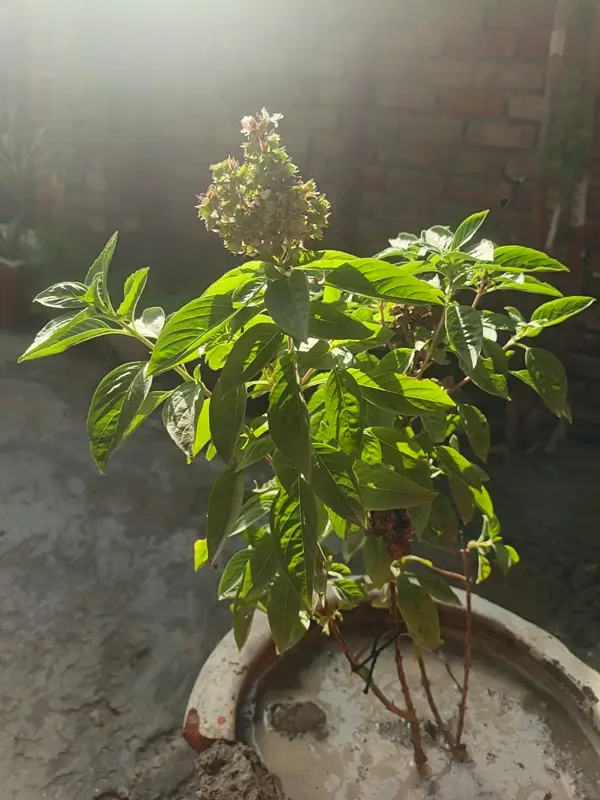
How to Stop Basil From Flowering & Turning Bitter
Managing strict flower control is an essential biological step when learning how to prune basil plants for maximum taste & plant longevity.
Basil is naturally wired as an annual herb – meaning its primary biological goal is to produce flowers & complete its life cycle before seasonal changes occur.
Adopting a plant-first, humanitarian care routine ensures your basil remains stress-free & productive without exhausting its metabolic reserves on early flowering.
1. Why Immediate Flower Bud Removal Matters
When a basil plant begins to flower its internal chemistry alters rapidly:
-
Flavor Loss: Basil plant redirects essential oils away from foliage. As a result leaves quickly turn bitter & astringent.
-
Energy Diversification: Soil nutrients & water are diverted from generating succulent green leaves to producing floral spikes & seeds.
-
Hardening woody stems: Soft green stems transform into woody stalks & halting emergence of new & tender side shoots.
2. Effective Techniques to Pinch Off Blooms
-
Inspect Upper Canopy Regularly: Scan stem tips twice a week for tiny green or purple pyramid-shaped flower buds.
-
Execute Trimming: Using micro-tip snips & clean fingernails – cut the flower spike at its base & exactly 1/4 inch directly above top set of healthy leaves.
-
Redirect Botanical Sap: As detailed in organic care guides on Plants Nexus, removing flower heads immediately signals plant to redirect its energy downward into activating dormant side buds.
Top-Down Harvesting Strategy for Maximum Leaf Yield
Understanding the correct harvest direction is a crucial biological factor when learning how to prune basil for continuous growth & plant health.
Many gardeners make critical mistake of picking large leaves from bottom of the stem & leaving a bare stalk topped by heavy growth.
Following a proper top-down harvest direction ensures your herb maintains structural integrity & regenerates foliage quickly.
Following plant-first gardening principles protects your herb’s vascular system while boosting overall yield.
1. Why Top-Down Trimming Preserves Energy
Pruning your basil starting from upper growing tips downward yields distinct biological benefits:
-
Preserving Energy: Large leaves near the soil line function as high-efficiency solar panels. Leaving them intact ensures plant continues capturing sunlight to power new growth at your upper cut locations.
-
Preventing Leggy Stems: Stripping lower leaves forces plant to stretch upward, creating a tall &top-heavy stem prone to bending or breaking under wind & rain.
-
Stimulating Side Branches: Cutting top growing tips eliminates apical dominance & directs plant sap into dormant side buds to create a compact & bushy structure.
2. 3 Key Rules for Safe Harvesting
-
Always Cut Above Nodes: Work from top canopy downward – making horizontal cuts 1/4 inch directly above active leaf nodes as recommended by Plants Nexus.
-
1/3 Rule: Never harvest more than one-third of the total foliage at one time to avoid putting root system into severe shock.
-
Keep Soil & Leaves Clean: Leave lower leaves untouched & avoid letting them rest directly on wet soil to prevent moisture-borne soil diseases.
The One-Third Rule: Avoiding Pruning Shock
Understanding the biological plant limit when harvesting foliage is a vital & non-negotiable rule when learning how to prune basil safely for long-term health and massive harvests.
While basil is known for its resilience & rapid growth rate over-pruning or stripping too much leaf mass at once can place root system into severe biological shock.
A good plant-care approach requires balancing your kitchen harvest needs with the living plant’s fundamental metabolic requirements.
Respecting strict foliage limits ensures your herb remains stress-free, vibrant & capable of generating fresh leaves season after season.
1. The Science Behind the 33% Harvesting Limit
The human-to-plant stewardship relationship thrives when we respect natural limits.
In botany, golden rule of herb harvesting is the One-Third Rule: never remove more than 33% (one-third) of a plant’s total leaf volume during a single pruning & harvesting session.
When you exceed this plant limit & strip away too many leaves at once several critical physiological issues occur:
-
Severe Photosynthetic Loss: Leaves act as plant’s primary solar panels, converting sunlight, carbon dioxide & water into glucose through photosynthesis. Stripping more than a third of foliage starves plant energy & halting growth entirely.
-
Root System Shock & Dieback: A plant’s root mass is directly balanced with its top foliage mass. When above-ground leaf area is drastically reduced – roots no longer receive carbohydrates from leaves. In response portions of the root system die off & leaving plant vulnerable to soil pathogens.
-
Vascular Water Stress & Sun Scald: Tender inner stems rely on upper canopy shade to regulate temperature. Over-pruning exposes delicate green stems to harsh direct sunlight & causing stem sunburn & vascular tissue collapse.
2. 4 Steps to Harvest Within Safe Limits
To ensure your harvesting routines stay well within safe biological limits follow this structured step-by-step approach:
Step 1: Conduct a Foliage Inventory
Before picking up your shears or making any cuts – step back & evaluate your basil plant’s overall canopy volume.
Take mental note of total number of healthy leaf sets from top tip down to the soil line.
Step 2: Identify Upper One-Third Harvest Zone
Visually divide plant into three equal horizontal tiers:
-
Top Tier (Upper 33%): Your active harvest zone. This includes upper growing tips, long stem tops & emerging flower buds.
-
Middle & Lower Tiers (Lower 67%): Your protected preservation zone. These mature & broad leaves must remain untouched to capture sunlight & anchor root health.
Step 3: Execute Precise Cuts Above Nodes
Working exclusively within upper tier, make clean horizontal cuts 1/4 inch directly above active leaf nodes using micro-tip pruning snips.
As detailed in comprehensive organic herb guides on Plants Nexus, cutting cleanly above nodes within this upper tier triggers dormant side buds without depleting plant’s structural reserves.
Step 4: Allow a 7 to 10 Day Recovery Window
After harvesting up to your 33% foliage limit – allow plant time to rest & regenerate.
Provide 6 to 8 hours of direct sunlight & water deeply at soil base & refrain from making additional cuts for at least 7 to 10 days.
Once fresh & vigorous side branches sprout & establish new leaf sets – you can safely schedule your next harvest session within new plant limit.
Post-Pruning Care for Rapid Recovery
Providing gentle, attentive care after trimming is final essential step when learning how to prune basil for lifelong health & bushy growth.
Executing precise cuts & respecting foliage limits creates open stem wounds that require dedicated moisture & nutrient support to heal effectively.
1. Essential Post-Trim Maintenance: 4 Steps
-
Targeted Soil Base Watering: Always apply water directly to soil level near roots. Avoid wetting fresh pruning cuts or foliage – as lingering moisture encourages soil-borne fungal spores like downy mildew.
-
Maximize Daily Sunlight: Place your basil where it absorbs 6 to 8 hours of bright or direct sunlight daily. Light energy powers photosynthesis & driving plant sap straight into dormant side buds.
-
Replenish Organic Nutrients: Apply a diluted & organic nitrogen-rich fertilizer every 3 to 4 weeks. Nitrogen fuels rapid green leaf formation & strengthens vascular stem tissue.
-
Ensure Adequate Spacing: Keep sufficient air circulation around potted herbs. Proper airflow quickly dries out atmospheric humidity & protects open cuts while supporting healthy root respiration.
By following these simple steps on how to prune basil & plant-care guides on Plants Nexus, combining precise cutting techniques with mindful post-pruning care ensures your basil remains a vibrant & long-lasting culinary companion.
Frequently asked Questions
Cut central main stem 1/4 inch directly above a leaf node (where two tiny leaves sprout). This stops apical dominance & forces 1 stem to branch into 2. Always harvest from top down & pinch off flower buds immediately.
Prune for the first time when plant reaches 6 to 8 inches in height & has developed at least 3 to 4 pairs of true leaf nodes. Cutting any earlier will shock young seedling.
Basil plant grows tall, thin, & leggy. It will quickly bloom flowers turn its stems woody & shift chemical oils—making leaves taste bitter before setting seeds & dying off.
No. Cutting a basil plant down to soil level removes all active growth nodes & solar-panel leaves, killing the root system. Always leave at least 2 to 3 pairs of lower leaves (retaining 67% of the plant) to power recovery. How do you trim a basil plant so it keeps growing?
When should you first prune basil?
What happens if you don't trim basil?
Will basil grow back if you cut it all the way down?