
Key Takeaways
| Takeaway | How this helps you |
|---|---|
| Spotting harvest timing | When to harvest carrots & How (with right tool)
Gives a subtle cue so you avoid early pulls or a ruined crop |
| Understanding growth stages | Frames when to check & what to expect at each stage |
| 4 Visible signs to inspect | Simple checks that save your best roots — no heavy tools needed |
| Weather’s role in flavor and timing | Hints when to move faster or wait, protecting taste & texture |
| 4 Common harvesting mistakes | Alerts you to avoid easy errors that cost yield & quality |
| Storage & long-term preservation | Shows the next steps to keep carrots crisp & usable for months |
Recognizing the Ideal Time to Harvest Carrots
Determining when carrots have reached maturity can be somewhat of a reckoning challenge for novice gardeners.
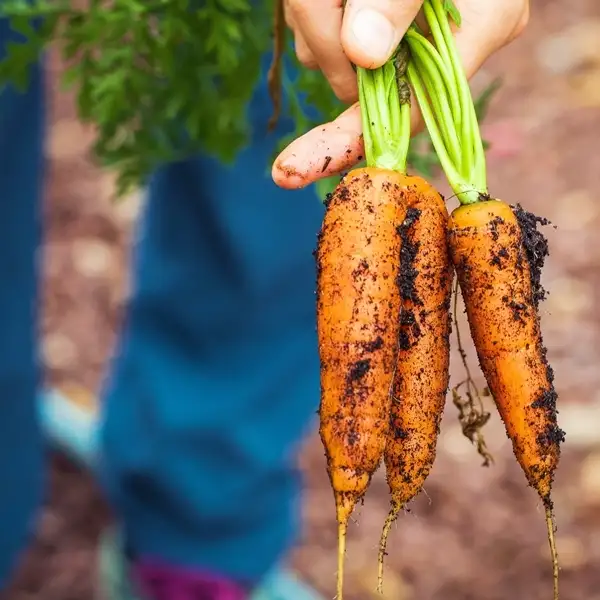
This colorful vegetable does not provide overt signs that it’s ready to be plucked from the ground, unlike numerous other types of crops that change color or drop from plants when they’re ripe.
So precisely how do you recognize the ideal time to harvest your carrots?
| General Guidelines | Details |
|---|---|
| Typical days to maturity |
|
| Varietal differences & taste preference |
|
| An expert horticulture specialist’s opinion |
|
In essence – factors like carrot variety & individual preferences play pivotal roles in deciding perfect moment for harvesting.
4 Stages in the Growth Cycle of Carrots
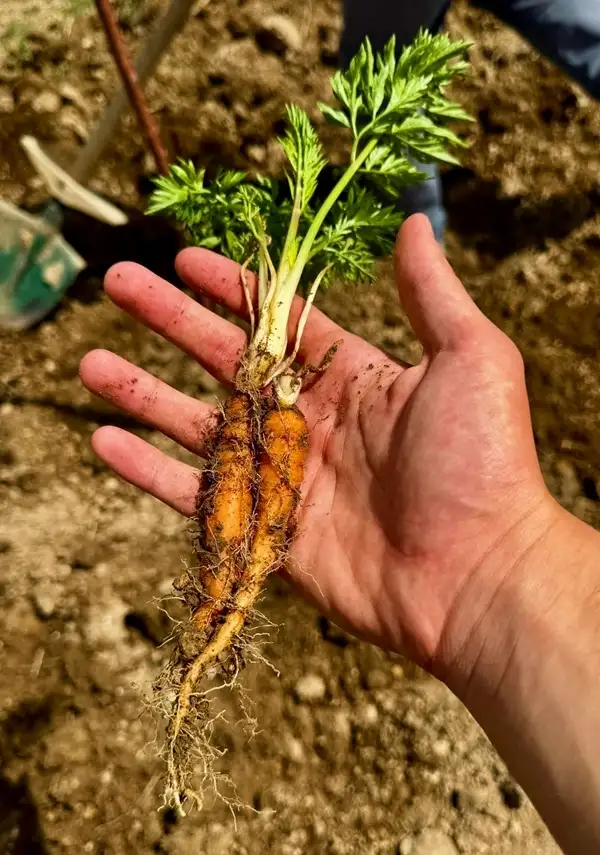
To truly grasp when it is time to pull your prized vegetables out of the soil requires intimately understanding their growth cycle.
I am sharing a stage-by-stage timeline that helps you know when to check & what to expect.
| Stage | Timeline & what to expect |
|---|---|
| Germination |
|
| Baby stage |
|
| Rapid enlargement |
|
| Maturity |
|
4 Signs Your Carrots Are Ready for Harvesting
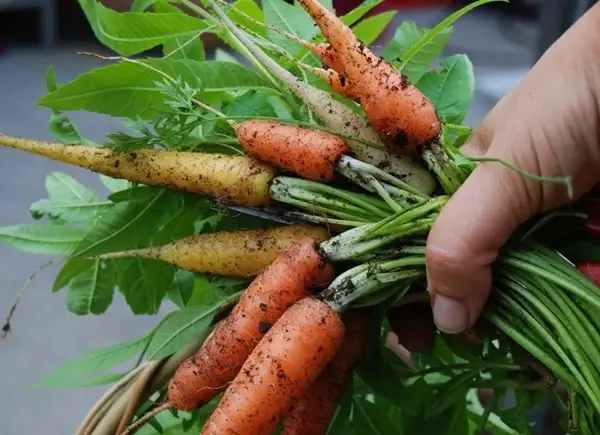
While understanding the growth cycle aids keen horticulturists in predicting when your carrots may be ready– there are also noticeable signs that should alert you.
Generally, they involve checking both above & below the soil – so don’t fear getting a little dirty!
| Sign | What to look for / Action |
|---|---|
| Shoulder size |
|
| Color at the collar |
|
| Firmness & shape |
|
| Temperature cue |
|
How Weather Conditions Impact Your Carrot Harvest Time
Undeniably, weather plays a significant role in managing any crop’s temporal development, including this nutritious root vegetable.
| Condition | Effect & recommended action |
|---|---|
| Light frost |
|
| Hard frost / deep freeze |
|
| Cool climate |
|
| Hot climate |
|
4 Common Mistakes To Avoid When Harvesting Carrots
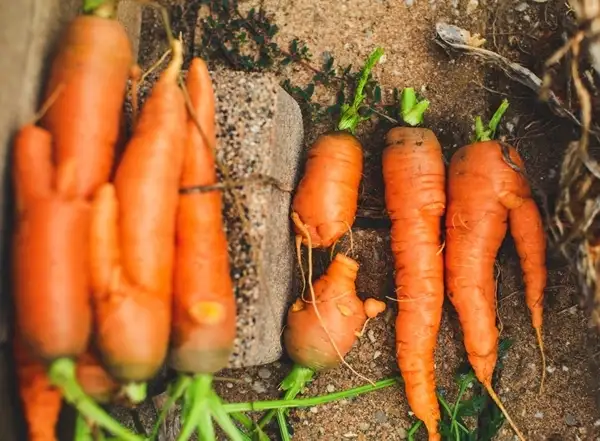
While harvesting seems straightforward, there are instances where missteps either short-change the rewards of patient sowing or potentially damage entire plots.
- Firstly, refrain from harvesting too early, because although tender and sweet, unpredictable sizing makes them difficult to utilize in the kitchen.
- Similarly, waiting too long causes problems, especially at the onset of winter, when freezing underground can spoil the bounty.
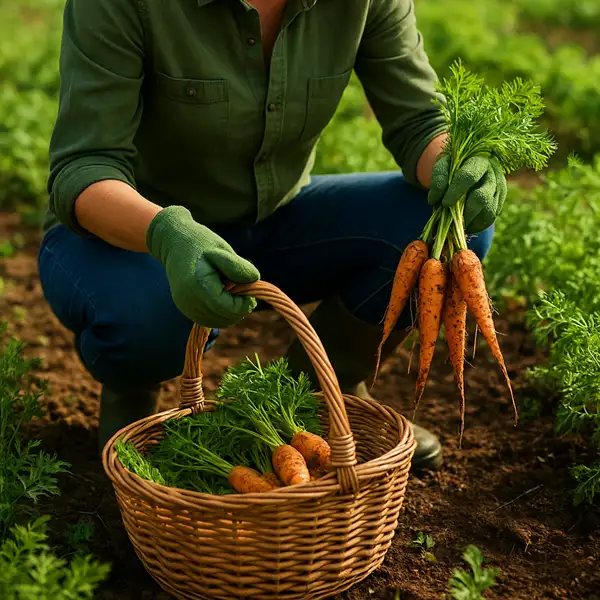
- Also, avoid digging with hands or tugging green tops, as this tends to risk snapping roots; using a gardening fork is best.
- Lastly, remember never to leave pulled carrots lying in the sun, as this saliently invites pests & disease — instead, store them in cool, dry areas.
Best Steps for Properly Storing & Preserving Your Harvested Carrots
Preserving your harvested carrots provides a beneficial plot-to-plate sustainability mechanism – which is vital.
For long-term storage, consider canning, pickling, or freezing methodologies used by seasoned kitchen gardeners around the world — each demanding unique recipes lasting months, if not years.
As suggested by Martha Maletta, Home Horticulture Consultant of Rutgers NJAES:
“Short-term storage needs are met in most home refrigerators, but longest quality retention requires temperatures just above freezing & high humidity”
| Method | Key steps & conditions |
|---|---|
| Short-term (fridge) |
|
| Freezing |
|
| Canning / Pickling |
|
| Root cellar / in-ground with mulch |
|
Master the Cycle, Master the Harvest
Understanding growth cycle & nature, coupled with knowledge of right harvesting tools & post-harvest management – produces best-quality yield. It empowers sustainable food futures.
Frequently Asked Questions
How do I know when carrots are ready to pick? What do carrots look like when ready?
Carrots signal readiness when their shoulders rise slightly above soil. They show full color & about half-inch thickness. Gently uncover one root. If it is firm, well-formed & matches size you prefer - pick it.
Can you leave carrots in ground too long? What happens if you do not harvest carrots?
If left too long - carrots turn woody, lose sweetness & may freeze or rot in cold soils. Unharvested roots can crack, attract pests & become unusable.
When to harvest carrots in containers?
Check container carrots once their tops show proper size. Containers warm faster - so roots mature earlier - harvest as soon as shoulders match your preferred thickness.
When to harvest carrots in fall?
Lift fall carrots before first hard frost. Light frosts enhance flavor - but deeper freezes damage roots - so harvest once soil is cool but workable.
How to grow carrots without seeds?
You cannot grow new edible carrots without seeds. Carrot tops only regrow foliage - not roots.
How to germinate carrot seeds fast?
Presoak or pre-sprout seeds in a damp paper towel for a day or two - then plant them in fine, moist soil. Consistent moisture speeds the process.