
Key Takeaways
| 🌱 Key Takeaways | Why This Guide Helps You |
|---|---|
| Understand true basics of potato planting |
|
| Is fall really the right season? |
|
| The hidden pros & cons of fall planting |
|
| Steps for autumn success |
|
| Common mistakes to avoid |
|
| Secrets to a successful harvest |
|
Basics: Planting Potatoes
As one of the most versatile & universally loved foods – potatoes are a staple crop in gardens worldwide.
Before learning to plant this tuberous crop during fall – it is crucial to understand its basic cultivation needs. Often grown as annuals, potatoes need loose & well-drained soil – rich in organic matter for healthy root development while maintaining adequate moisture levels.

Potato Chitting
- To plant potatoes, small “seed” potatoes or pieces of bigger ones with at least two ‘eyes‘ or growth points serve as the starting point — often referred to as ‘chitting.’
- This process triggers early sprouting that gives your plants a head start when planted. They usually prefer cooler weather for vigorous growth – which makes planting them during early spring or late summer beneficial.
Traditionally, gardeners have recommended planting potatoes around Saint Patrick’s Day in March. However, growers can buck tradition by experimenting with different planting seasons – like fall.
The region’s specific climate plays a significant role in the decision-making process because too cold temperatures could stunt potato growth.
Finally, understanding spacing between plants is vital because overcrowded conditions lead to stunted growth & limited yields.
Conventionally, 12-15 inches apart within rows spaced about 3 feet apart allows adequate room for sprawling vines & developing tubers.
Is Fall the Right Season to Plant Potatoes? Exact Answer
You might be questioning whether autumn can be a productive season for growing an otherwise cooler-weather-loving species like potatoes.
It largely depends on which place you live in. For example, which United States Department of Agriculture (USDA) hardiness zone you reside in – this categorization is based on geographic locations & their minimum winter temperatures.
For warmer climates belonging to zones 8–11, where frost does not occur before December – the ideal situation exists for growing fall crops – including sweet carrots & Irish-type potatoes. The mild winter weather prevents premature freezing while still providing sufficiently cool conditions.
However, in colder regions where harsh winters start earlier – it becomes a bit more challenging for gardeners. Nevertheless, with right steps & precautions – such as mulching & using cold frames or low tunnels to keep soil warm – it is possible, even in these tougher climates, to grow potatoes in autumn season.
3 Advantages and 3 Disadvantages of Growing Potatoes In Fall
Growing potatoes during fall can present both advantages & disadvantages.
| Advantages | Disadvantages |
|---|---|
| Fewer spring pests (like Colorado potato beetles) & reduced early-blight pressure when planted late | Higher frost risk in cold zones – needs protection (mulch, low tunnels) |
| Can fit into extended garden calendars for warm regions (extra harvest opportunities) | Moisture balance is critical – too wet or too dry can harm sprouting & tuber set |
| Container planting is flexible – move pots for frost protection or warmth | Shorter growing window in cool zones may limit tuber size unless varieties & protection are chosen carefully |
5 Necessary Steps To Plant Potatoes During Autumn
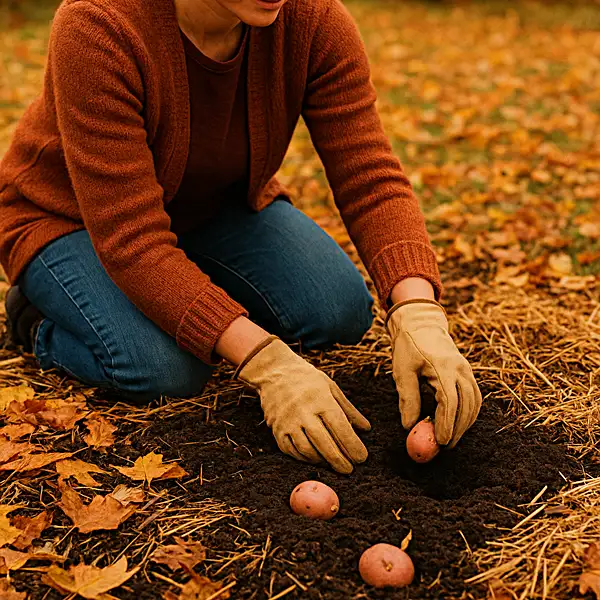
Preparation is pivotal when aiming for successful potato cultivation during autumn.
| Step | Action | Why / Quick Tip |
|---|---|---|
| 1. Choose seed |
|
|
| 2. Prepare soil |
|
|
| 3. Plant depth & spacing |
|
|
| 4. Mulch & protect |
|
|
| 5. Water management |
|
|
5 Common Mistakes While Planting Potatoes In Fall (+FIXES)
Despite well-intentioned efforts, gardeners may make mistakes when attempting to plant potatoes in fall.
| Common Mistake | Why It Hurts | How to Fix |
|---|---|---|
| Using uncertified supermarket tubers |
|
|
| Wrong planting depth |
|
|
| Over-watering immediately after planting |
|
|
| Ignoring frost risk / skipping protection |
|
|
| Underestimating disease risk |
|
|
4 Tasks to Ensure a Successful Potato Harvest After a Fall Planting
To secure a successful harvest after fall planting, observe a few critical steps.
These are regular watering, tillering, hilling process, maintaining ideal growing conditions & periodically applying compost or topsoil around plants to ensure optimal nourishment & continuous healthy development.
| Task | When to Do It | Why / Tip |
|---|---|---|
|
|
|
|
|
|
|
|
|
|
|
|
Finally, remember to evaluate weather forecast. In colder regions, frosts can occur earlier.
1 Secret Tip
- Leaving tubers in ground for a couple of extra weeks after vine death can improve flavor – but delaying too long risks frost damage.
Vigilance is the key here to successfully harvesting late-season homegrown potatoes.
Frequently Asked Questions
When's the best time to plant fall potatoes?
Plant fall potatoes in early fall if you live in warmer USDA zones (8–11) - where winters are mild. In cooler areas, plant late summer to early fall & protect with mulch or low tunnels to help tubers sprout before frost.
Can you plant potatoes in the fall in pots?
Yes! You can. Use certified seed potatoes in well-drained soil, plant four inches deep & keep pots in spots - where frost protection is possible - like patios or greenhouses.
When to plant potatoes in the fall zone (5, 6, 7 & 8)?
Zone 8 allows early fall planting. In zones 5,6 & 7 - plant late summer to early fall & use mulch or covers to prevent frost damage.
Can you plant potatoes in the summer?
Yes. In cooler or northern regions, mid-summer planting works for a fall harvest. In hotter climates, choose heat-tolerant varieties & provide shade & steady moisture.