

Key Takeaways
| Key Takeaways | Why This Article is a Must-Read |
|---|---|
| Uncovers a hidden floral danger to your feline | Are daffodils poisonous to cats? Reveals why a popular garden favorite can turn deadly / toxic for pets |
| Vet-backed insights and expert warnings | Includes professional advice you won’t find in casual pet forums |
| Early symptom recognition made simple | Learn the subtle signs before the situation turns critical |
| Emergency steps you must know | Shows the safest way to respond without risking your cat’s life |
| Long-term risks explained | Highlights potential consequences that can last well beyond recovery |
| Proven prevention tips | Offers solutions to protect your cat without giving up your garden’s charm |
Dangers of Daffodils to Cats
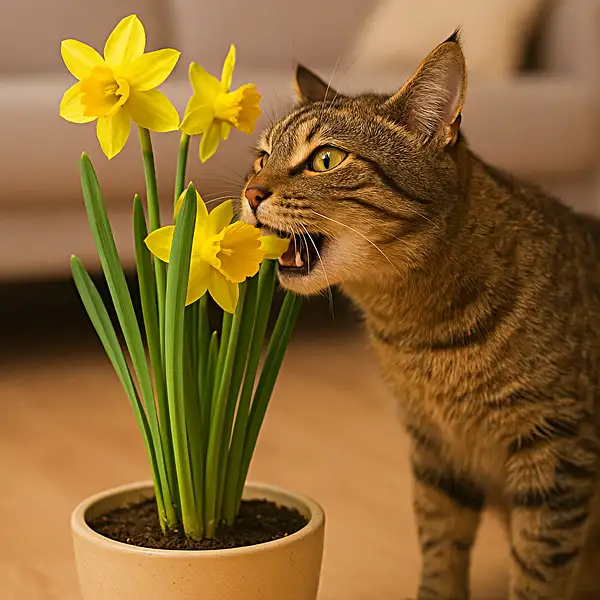
Despite their delicate appearance & delightful, fragrant scent – daffodils pose a significant threat to cats.
Belonging to Narcissus family, these vibrant flowers are laced with toxic alkaloids, particularly lycorine – that can have fatal effects on felines. Every part of daffodil – from its trumpet-like petals & stem down to its roots – is poisonous if ingested by your cat.
The concentrated amount of toxins particularly resides in bulb. Thus making it far more hazardous than any other part of flower. Consequently, cats that have a tendency towards digging or those coming across loose or unearthed bulbs stand at risk too.
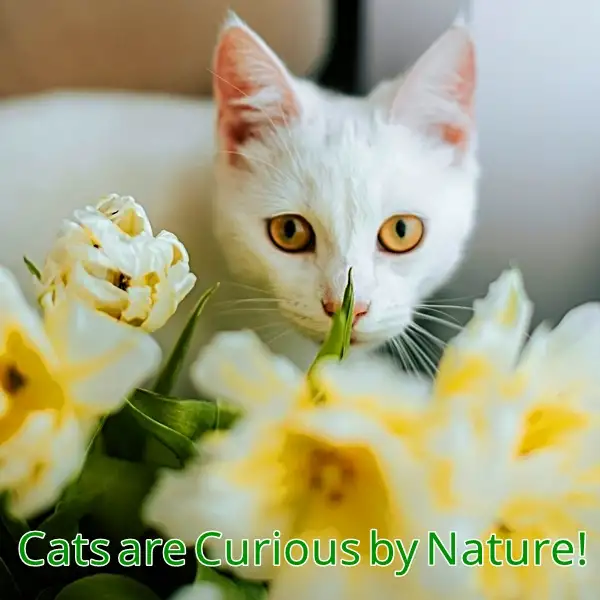
Cats are an obligate carnivorous species – meaning their bodies require meat for healthy survival. Their digestive systems are not designed for breaking down vegetation or floral matter & especially harmful substances such as those found in daffodils. This can result in acute poisoning when ingested – leading to serious physical discomfort & possible life-threatening complications.
According to Pet Poison Helpline statistics, springtime sees an increase in calls reporting exposure incidents involving common garden plants – such as daffodil – which reveals their potential danger during blooming seasons.
How a Cat’s Health Can Be Affected by Daffodil Poisoning

When a cat consumes any part of a daffodil – be it leaves, stems or bulbs – chemical compounds called alkaloids are released into its system – causing poisoning symptoms very soon afterwards.
| Toxin |
|
| Primary immediate effect |
|
| Gastrointestinal |
|
| Cardio / Neurological |
|
| Bulb risk | Bulbs are far more hazardous than petals or leaves – swallowing a bulb greatly increases severity & risk of obstruction |
“It’s like any poison – it has a cumulative effect. The more the animal eats, the sicker they’ll become,” warns Dr. Justine Lee at Pet Poison Helpline
6 Serious Signs of Daffodil Poisoning in Felines
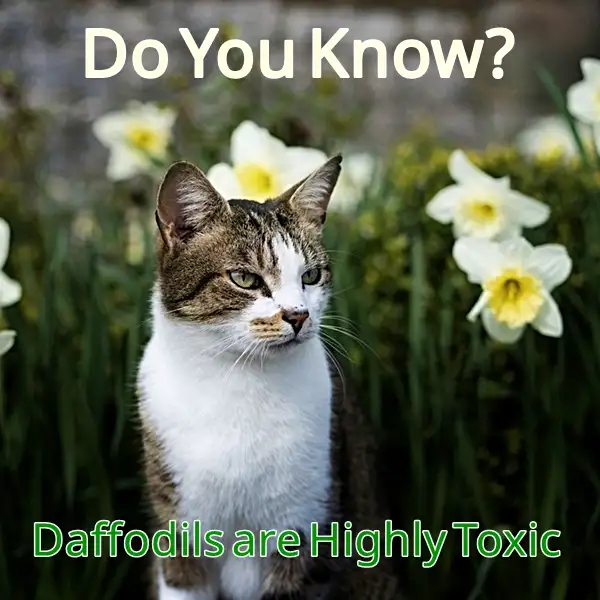
Recognizing early signs associated with daffodil poisoning assists in taking immediate actions to prevent further damage to your cat’s health.
The symptoms might vary according to quantity ingested by your pet, but they typically involve various discomfort signs such as –
| Recognizing Symptoms of Daffodil Poisoning in Felines | ||
|---|---|---|
| Symptom | What it looks like | Likely onset |
|
|
|
|
|
|
|
|
|
|
|
|
|
|
|
|
|
|
5 Immediate Steps to Take If Your Cat Ingests a Daffodil
If you suspect that your cat has ingested a daffodil – bulb, petals or leaves –
| 1. Remove plant material |
|
| 2. Call your vet or poison control |
|
| 3. Don’t attempt risky home remedies |
|
| 4. Veterinary treatments |
|
| 5. Follow-up |
|
My Recommendation

I will recommend –
“Immediately contact vet without attempting to administer home remedies using online resources… Also, remember to bring along a sample daffodil…”
4 Long-term Impacts of Daffodil Toxicity on Cats
The long-term impact of daffodil poisoning in cats depends on the –
| Outcome depends on |
|
| Possible organ effects |
|
| Surgical risks |
|
| Behavioral/psychological |
|
The Best Thing to Remember
Neglect or delays concerning initial treatment often lead to various complications arising from prolonged exposure.
4 Expert Preventive Measures: Keeping Your Cat Safe from Potential Floral Hazards
When it comes to preventing pet poisonings, prevention is the best medicine.
It means knowing which plants are poisonous so that you can either avoid them altogether or keep them secure where your furry friend cannot reach.
| Area | Practical Prevention Tips |
|---|---|
| Indoors |
|
| Outdoors |
|
| When gifting/visiting |
|
| Education |
|
#1 Advice to Follow
‘Best way to prevent daffodil toxicity is by either keeping these plants out of your yard altogether or planting them in areas that your pet cannot access’
– Dr. Tina Wismer, ASPCA Animal Poison Control Center.
Final Thoughts
Awareness, knowledge, signs, symptoms & ways to take immediate action are key to protecting our beloved pets against potential floral hazards in their surroundings.
This ensures continuous well-being throughout their respective lifetimes & secures a valuable companionship period their master holds dear.
Frequently Asked Questions
Can daffodils kill cats?
Yes! Large ingestion or delayed treatment can shut down vital functions. It leads to coma or death.
Are daffodils poisonous to humans?
Yes! Eating them can trigger nausea, vomiting, diarrhea & skin irritation from sap.
What happens if my cat eats a daffodil?
Within minutes, toxins can cause drooling, vomiting, diarrhea, lethargy, tremors & abnormal heart rate.
Can I have daffodils in the house with cats? What is the best way?
Only if kept completely out of reach or replaced with realistic artificial flowers.
What is most toxic flower to cats?
True lilies - tiny exposures can cause kidney failure & death.
How toxic are daffodils?
Highly toxic! Bulbs hold the strongest poison & can harm gut, heart & nervous system.